
Dealing with a broken garage door is never fun, especially when you’re rushing to work or coming home after a long day. I’ve seen this problem countless times in my years of experience. When it suddenly stops working, it can be confusing and even dangerous if not handled correctly. In this guide, I’ll walk you through the common signs, what to do, and when to call in the pros for your broken garage door issues.
Common Signs of a Broken Garage Door
If your garage door makes strange noises, moves slower than usual, or seems unbalanced, these are clear warning signs. A broken garage door doesn’t always completely fail all at once. Sometimes, it gives you hints before completely stopping.
You might notice it looking crooked when it’s partially open or hear grinding and scraping sounds. These signals shouldn’t be ignored because they often mean bigger problems are coming. Catching these issues early can save you money and prevent a complete breakdown when you least expect it.
When Your Garage Door Opens and Closes Improperly
One day it works fine, and the next day it moves in jerky motions or stops halfway. This irregular movement is a common symptom of a broken garage door. The system might also reverse direction suddenly or refuse to close completely.
These problems often happen because of sensor issues, track misalignment, or worn-out rollers. If your remote works inconsistently, it could be a simple battery problem or something more serious with the opener system. Pay attention to these patterns because they tell you exactly what might be wrong.

Understanding Broken Garage Door Springs
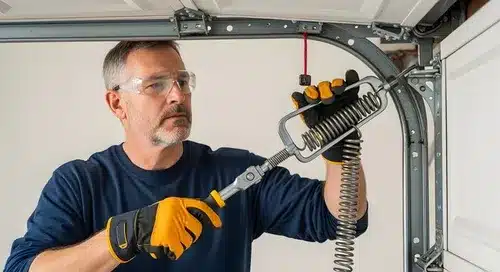
The springs are the muscles of your system. They do the heavy lifting so your opener doesn’t have to work so hard. When a spring breaks, you’ll usually hear a loud bang like a firecracker or gunshot.
A broken garage door spring is one of the most common and serious failures. Without working springs, your door becomes extremely heavy and dangerous to operate. Most modern options have two springs, so if one breaks, the other will still work but will be under extra stress and will likely fail soon too.
What Happens When a Garage Door Spring Breaks
When a spring breaks, your door might slam shut unexpectedly or refuse to open at all. The opener motor might run, but it won’t move because the spring tension is gone
This situation creates real safety concerns. A door with broken springs can weigh hundreds of pounds and could fall suddenly. The extra strain can also damage your opener motor as it tries to lift weight it wasn’t designed for. Spring replacement is definitely not a DIY job because of the dangerous tension involved.

How to Safely Open Your Garage Door When Malfunctioning
If you find yourself with a broken garage door, here’s what you can do to safely get it open:
- Look for the emergency release cord (usually red) hanging from the opener
- Pull this cord to disconnect the door from the automatic opener
- Carefully lift the mechanism manually if it's not too heavy
- Use a step ladder to reach the release if needed
- Secure the area in the open position with a clamp or vice grip
Never try to force a system that feels extremely heavy, as this usually means the springs are broken. If the door won’t budge or feels unusually heavy, it’s time to call a professional rather than risk injury.
When to Contact a Professional Garage Door Service
Some garage door problems need professional help. If your springs are broken, cables are snapped, or the thing is completely stuck, it’s time to call an expert. Garage door repair specialists have the right tools and knowledge to fix these issues safely.
Most companies offer emergency services because they understand how important access to your garage is. When choosing a service, look for licensed and insured professionals with good reviews. Ask about warranty coverage on parts and labor before they start the work.
Risks of Attempting to Open a Door with a Broken Spring
Trying to fix a broken garage door spring yourself is honestly a bad idea. These springs store massive amounts of energy and can cause serious injuries if they snap or unwrap suddenly. Even professional technicians approach spring replacement with extreme caution.
Besides personal injury risks, improper repairs can damage your door system further or create safety hazards for your family. The money you might save doing it yourself isn’t worth the risk of hospital bills or having to replace more parts later because of amateur repairs gone wrong.
Tips to Keep Your Garage Door in Good Working Order
Regular maintenance can prevent many common garage door problems. I recommend checking your door’s hardware every few months and tightening any loose bolts or brackets. Lubricate moving parts like rollers, hinges, and springs with silicone-based lubricant, not WD-40.
Listen for unusual noises when your door operates and watch how it moves. Most problems give warning signs before they become serious. Testing the auto-reverse safety feature monthly is also important to prevent accidents. Simply place a roll of paper towels under the door as it closes to make sure it reverses when it touches an object.
A little attention now saves you from dealing with a completely broken garage door later. Plus, a well-maintained one lasts longer and operates more quietly, which your neighbors will appreciate if you leave early for work!
Frequently Asked Questions
How much does it cost to fix a broken garage door?
Fixing a broken garage door typically costs between $150 to $350 for minor issues like sensor or remote problems. For serious issues like broken springs, expect to pay $200 to $400.
Complete opener replacement runs $300 to $500. Full system issues might reach $700+. Prices vary by location, company, and time needed. Regular maintenance helps avoid costly emergencies down the road.
Can I use my broken garage door manually until it's fixed?
Yes, you can operate a broken garage door manually in some cases. Use the emergency release cord to disconnect the mechanism from the opener. However, if springs are damaged, the panel might be too heavy to lift safely. Never force movement when resistance is felt. Consider temporary alternative entry points until your system receives professional attention.
What causes springs to break in the first place?
Springs break primarily due to metal fatigue after thousands of cycles (open/close operations). Extreme temperature fluctuations accelerate wear. Poor quality materials or incorrect installation also contribute. Most springs last 7-10 years with normal use. Rust from moisture exposure weakens components over time. Preventing issues means understanding that these springs typically have a predictable lifespan.
Is it worth repairing an older broken garage door or should I replace it?
If your broken garage door is over 15-20 years old, replacement often makes more economic sense than repair. New systems offer better security, insulation, and energy efficiency. Consider replacement when repair costs exceed 50% of new installation. Modern systems include advanced safety features and smartphone connectivity. Weigh repair frequency against long-term value when deciding.
How can I prevent my mechanism from breaking in the future?
Prevention starts with quarterly lubrication of moving metal parts using silicone-based products. Tighten hardware regularly as vibrations loosen connections. Listen for unusual sounds indicating potential issues. Test safety features monthly. Clean tracks and remove debris. Schedule professional inspections annually. These simple steps help avoid unexpected broken situations and extend system lifespan considerably.