
Winter brings beautiful snow and cozy nights, but it also creates headaches for homeowners. We’ve seen countless families dealing with garage door problems that appear when temperatures drop. The frigid weather affects every component, from metal parts to electrical systems. Your overhead system works harder during these months, and that extra strain reveals weaknesses. Understanding common garage door problems helps you prepare and respond quickly. We’re here to walk you through the most frequent garage door problems we handle each winter season and share our experience fixing them.
Why Cold Weather Causes Garage Door Problems
Cold temperatures make metal contract and lubricants thicken. This affects how smoothly everything operates together. We’ve noticed that most service calls spike when temperatures drop below freezing. The components that worked perfectly in summer suddenly struggle or fail completely.
Metal parts shrink slightly in extreme cold. This changes the alignment and increases friction between moving pieces. Springs lose tension, and motors work harder to lift the same weight. These changes stress your system and can lead to unexpected breakdowns.
Frozen Tracks Prevent Smooth Door Movement
Moisture gets into your tracks and freezes overnight. This creates ice buildup that blocks the rollers from moving smoothly. We’ve chipped away plenty of ice during emergency calls at 6 AM when someone couldn’t leave for work.
The ice makes your opener strain against resistance it wasn’t designed for.
This can burn out the motor or strip gears inside the unit. You might hear grinding noises or see the system reverse unexpectedly. Sometimes the panels get stuck completely, leaving you trapped inside or outside your home.
Broken Springs Need Professional Garage Door Repair
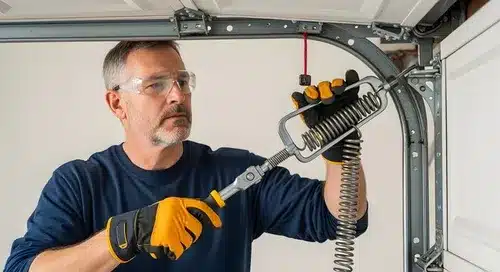
Springs are under tremendous tension all year, but winter makes them brittle. Cold metal becomes less flexible and more likely to snap without warning. When we respond to emergency calls, broken springs account for many winter garage door problems.
A broken spring makes your overhead system impossible to lift manually. The weight becomes too much for one person to handle safely. You’ll hear a loud bang when the spring breaks, like a firecracker going off. Never try fixing this yourself because the remaining tension can cause serious injuries.
Warning Signs of Spring Failure
Watch for these signs that your springs need attention soon:
- Panels hanging unevenly when partially open
- System opens slowly or struggles more than usual
- Visible gaps in the spring coils
- Loud creaking sounds during operation
- One side rises faster than the other
We always inspect springs during routine maintenance visits. This preventive approach catches garage door problems before you’re stuck with a broken system. Most springs last about 10,000 cycles, but harsh winters can shorten their lifespan significantly.

Opener Won't Respond to Remote Commands
Cold affects batteries in your remote control faster than you’d expect. We’ve replaced countless remote batteries during winter service calls. The electrical components inside your wall button and opener also become sluggish in extreme temperatures.
Sometimes the issue isn’t the remote at all. The receiver board inside your opener unit can malfunction when exposed to temperature swings. We’ve seen circuit boards fail after years of expansion and contraction cycles. Moisture buildup inside the unit creates corrosion that blocks electrical signals.
Troubleshoot Your Garage Door First
Before calling for service, try these simple steps. Replace the batteries in your remote control and test again. Check if the wall button works properly when the remote doesn’t. Clean the photo eyes at the bottom of your tracks with a dry cloth.
Look at the antenna wire hanging from your opener motor. Sometimes it gets bent or damaged, reducing signal reception. Make sure nothing blocks the path between your remote and the receiver. These quick checks solve about 30% of garage door problems we receive calls about.

The Door Stops and Won't Open or Close
Photo eye sensors get misaligned easily during winter. Frost or ice buildup blocks the infrared beam between sensors. This safety feature prevents operation when it can’t verify the path is clear. We realign sensors on nearly every winter service appointment.
The limit switches inside your opener might need adjustment, too. These tell the motor when to stop moving. Temperature changes affect their calibration, causing your system to stop at the wrong positions. You might find it stopping halfway or reversing before reaching the floor.
Common Garage Door Problems with Noise in Winter
Loud grinding, squeaking, or banging sounds get worse when temperatures drop. The lubricant in your rollers and hinges thickens like honey in cold weather. This creates more friction and those annoying noises that wake up your neighbors.
We’ve found that metal rollers get especially loud in winter. They contract slightly and don’t roll as smoothly in their tracks. The chain or belt on your opener also makes more noise when cold. All these sounds indicate increased wear that could lead to component failure.
DIY Garage Fixes You Can Try Safely
You can handle some basic maintenance without risking injury. Apply garage-specific lubricant to hinges, rollers, and springs every few months. Wipe down your tracks to remove dirt and ice buildup. Tighten any loose bolts you see on panels or hardware.
Test your auto-reverse safety feature monthly by placing a block under the closing system. It should reverse immediately when it touches the obstruction. Never attempt to adjust springs or cables yourself. These jobs require special tools and training we’ve spent years developing.
Trust Professional Garage Door Repair for Lasting Results
We’ve spent decades fixing winter garage door problems for families throughout our community. Our team understands how cold weather affects every component in your overhead system. Most garage door problems require professional expertise to fix correctly and safely the first time.
Professional service means warranty protection and guaranteed workmanship. We check your entire system during repairs, not just the obvious issue. Understanding garage door problems helps us provide comprehensive solutions that prevent future breakdowns. This approach saves you money long-term and keeps your family safe. Ignoring garage door problems in winter only makes them worse and more expensive to repair. Your family deserves a system that works reliably all winter long.
Frequently Asked Questions
Q: What temperature causes the most issues for overhead systems?
A: Most problems start when temperatures drop below 20°F consistently. The extreme cold makes metal brittle and lubricants too thick. We see the highest number of service calls during cold snaps. If your area regularly experiences freezing weather, consider scheduling preventive maintenance before winter arrives. This proactive approach catches weak components before they fail when you need your system most.
Q: Can I use regular oil to lubricate my system in winter?
A: No, regular household oils actually make problems worse in cold weather. They become too thick and attract dirt that damages components. We always recommend garage-specific lubricants designed for temperature extremes. These products stay fluid in freezing weather and protect metal parts properly. Apply lubricant every three months during winter for best results and smoother operation.
Q: How much does emergency winter repair typically cost?
A: Emergency service calls usually cost $150-$400 depending on the issue. Simple fixes like sensor alignment or remote problems cost less. Spring replacement or opener repairs run higher, especially after hours. We offer free estimates so you know costs upfront. Regular maintenance costs much less than emergency repairs and prevents most winter breakdowns before they happen.
Q: Should I disconnect my opener and operate manually during extreme cold?
A: Only disconnect if your system completely fails to operate safely. Manual operation in winter is actually harder because of increased resistance. The springs need to be working properly for safe manual lifting. If you must disconnect, use the emergency release cord carefully. Never force a stuck system open, as this can cause damage or injury.
Q: How often should I schedule professional maintenance?
A: We recommend annual service appointments, ideally in early fall before winter hits. This timing catches potential problems before cold weather makes them worse. If you use your system more than ten times daily, consider spring and fall service visits. Regular maintenance extends the life of your components and prevents expensive emergency repairs during inconvenient times.
Q: What should I do if my system breaks during a snowstorm?
A: First, never try forcing it open or attempting repairs yourself in emergencies. Contact a 24/7 emergency repair service immediately for assistance. Keep your family and pets away from the stuck system. If possible, use another entrance to your home. Most professional companies respond within a few hours, even during storms. Meanwhile, document the problem with photos for insurance purposes if needed.