
Is your residential garage door acting up? You’re not alone. Most homeowners deal with garage door problems at some point. The good news is that many common issues have simple solutions you can try before calling a pro. We’re going to walk you through the most frequent problems and show you how to identify what’s wrong. Garage door troubleshooting doesn’t have to be complicated. Some fixes are totally doable on your own. Others need professional help to keep you safe. Let’s figure out what’s happening with your system and get things working smoothly again.
Understanding Common Garage Door Issues
Here’s the deal. Garage doors go through a lot of daily wear and tear. You probably use yours multiple times every day without thinking about it. Over time, all those cycles add up and parts start showing their age. Most homeowners notice something’s wrong when the door makes weird sounds or won’t open properly. The key is catching these problems early before they turn into expensive emergencies. Simple maintenance goes a long way in preventing bigger headaches down the road.
Think about all the moving parts working together every time you hit that button. Springs balance the weight. Rollers guide the panels along tracks. Sensors keep everyone safe. When one component struggles, it affects the whole system. That’s why garage door troubleshooting starts with understanding how everything connects. Once you know what each part does, spotting the problem becomes way easier. Basic garage door troubleshooting skills save you time and money.
How to Troubleshoot Your Garage Door Opener
Your opener is basically the brain of the operation. When it stops working, your entire routine gets thrown off. But don’t panic just yet. Many opener problems have straightforward explanations. Start by checking the obvious stuff first. Is the unit getting power? Are the batteries in your remote fresh? Sometimes the simplest solutions are the right ones. Effective garage door troubleshooting always begins with the basics.
Next, look at the wall button inside your space. If it works but the remote doesn’t, you’ve narrowed down the issue. Signal interference from nearby devices can mess with remote frequency. Moving those devices away often solves the problem. If neither the remote nor wall button work, the issue likely sits with the opener motor itself or its circuit board.
When Your Opener Won't Respond
Total silence when you press the button is frustrating. First, check your circuit breaker to make sure power’s reaching the unit. A tripped breaker happens more often than you’d think. Look at the outlet where the motor plugs in too. Test it with another device to confirm it’s working. If power isn’t the problem, inspect the motor unit for any visible damage or burnt smells.
The gears inside openers wear out over time. You might hear grinding or clicking sounds when the motor tries to run. These noises tell you the internal components are struggling. At this point, calling for help makes sense. Opener motors contain electrical parts that require specific tools and knowledge to fix safely.
When Your Door Reverses Unexpectedly
Does your system go down a few inches and then shoot back up? This happens because of the safety sensors near the floor. These sensors send an invisible beam across the opening. When something blocks that beam, the door automatically reverses to prevent crushing whatever’s in the way. It’s a crucial safety feature that saves lives and prevents damage.
Check if anything’s blocking the sensor path. Sometimes dirt, leaves, or cobwebs get in the way. Wipe both sensor lenses clean with a soft cloth. Make sure they’re aligned properly and facing each other directly. If cleaning doesn’t help, the sensors themselves might need adjustment or replacement by a technician. This type of garage door troubleshooting keeps your family safe.

Fix That Noisy Garage Door
A quiet system is a happy system. Loud grinding, squeaking, or rattling means something needs attention. The good news is that noise problems often have easy solutions. Garage door troubleshooting for sound issues usually starts with lubrication. Metal parts rubbing together without proper grease create all sorts of racket. Regular garage door troubleshooting can identify noise sources quickly.
Here’s what you can safely do garage door troubleshooting yourself:
- Hinges connecting each panel
- Roller bearings on both sides
- Top section of the springs (not the coils)
- Track sections where rollers move
Use a proper lubricant designed for these systems. Regular WD-40 isn’t ideal here. You want something that stays put and handles temperature changes. Apply a small amount to each moving part. Don’t go overboard or you’ll create a messy drip situation. This simple maintenance step can dramatically reduce noise and extend part life.
Cable Problems and Safety Concerns
Cables do serious heavy lifting alongside the springs. They help control the door as it moves up and down. When a cable frays or breaks, you’ll know immediately. The door might hang crooked or refuse to move at all. Never try fixing cables yourself. They work under extreme tension and can cause severe injuries if handled incorrectly.
Look for visible signs of cable wear during your regular checks. Frayed strands, rust spots, or unusual slack all signal trouble ahead. If you spot any of these warning signs, stop using the system right away. One broken cable puts extra stress on the other side. This imbalance can damage tracks, bend panels, or cause the whole thing to crash down unexpectedly. Professional garage door troubleshooting catches cable issues before they become dangerous.
Manual Locks and Emergency Release
Most modern systems include an emergency release cord. This red handle lets you disconnect the opener and operate everything manually during power outages. Pull the cord down and back toward the opener. This action disengages the trolley from the rail. Now you can lift and lower things by hand.
Be careful when using manual mode. Remember that without the opener, you’re dealing with the full weight yourself. If springs are broken, the door becomes incredibly heavy and dangerous to lift. Never attempt manual operation when you suspect spring failure. That red cord is for emergencies only when the system is otherwise functioning normally.

When to Call for Garage Door Service
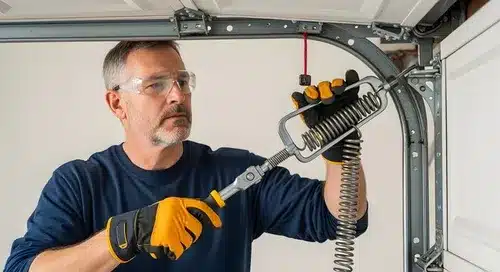
Some situations definitely need professional expertise. Spring problems top this list. These components store massive amounts of tension and require special tools to adjust or replace safely. Attempting spring work yourself risks serious injury. Leave this job to trained technicians every single time. DIY garage door troubleshooting has limits when safety is at stake.
Electrical issues also belong in the pro category. If you’ve checked obvious power problems and the opener still won’t run, internal electrical components probably need diagnosis. Modern openers use circuit boards that require testing equipment to troubleshoot properly. Track problems that involve bending or realignment need professional attention too. Improperly aligned tracks cause the door to bind, creating safety hazards and damaging other parts.
Garage Door Troubleshooting Tips: Repair or Replace?
Sometimes fixing what you have makes perfect sense. Other times, replacement is the smarter move. Age plays a huge role in this decision. Systems older than 15 years often need multiple repairs in quick succession. At that point, investing in a new garage door makes more financial sense than patching an aging system repeatedly. Smart garage door troubleshooting includes knowing when to call it quits.
Consider the scope of needed work. Simple fixes like sensor adjustments or roller replacement are worth doing. But if you’re looking at springs, cables, panels, and opener work all at once, replacement costs might actually be lower. Plus, newer systems offer better security features, quieter operation, and improved energy efficiency. A qualified technician can give you honest feedback about whether your current setup has good years left or if starting fresh makes more sense.
Garage door troubleshooting done by professionals is what you need.
Frequently Asked Questions
Q: How often should I perform garage door troubleshooting checks?
A: Monthly visual inspections from garage door troubleshooting experts catch most problems early. Look for frayed cables, loose hardware, and track debris. Listen for unusual sounds during operation. Test the auto-reverse feature by placing an object in the door’s path. Complete professional maintenance once a year keeps everything running smoothly and safely.
Q: Why does my garage door open by itself randomly?
A: This usually happens due to signal interference or stuck remote buttons. Neighbors with similar opener frequencies can trigger your system. Change your opener’s code or frequency if possible. Check all remotes for stuck buttons. Sometimes moisture inside remote casings causes them to send constant signals.
Q: Can I troubleshoot garage door spring problems myself?
A: Never try garage door troubleshooting yourself. Spring work is extremely dangerous without proper training and tools. These components hold enough tension to cause fatal injuries if they snap during adjustment. Always hire licensed professionals for any spring-related work. Even inspecting springs closely puts you at risk.
Q: What causes my garage door to get stuck halfway?
A: Several issues create this problem when you are garage door troubleshooting. Broken springs can’t support the full weight anymore. Binding tracks prevent smooth movement. Dead opener batteries or limit switch problems also cause halfway stops. Check for obvious obstructions first. If nothing’s blocking the path, call for professional diagnosis.
Q: How long should a residential garage door last?
A: With proper garage door troubleshooting, expect 15-30 years from a quality system. Springs typically last 7-10 years depending on usage cycles. Openers usually run 10-15 years before needing replacement. Regular lubrication and professional tune-ups significantly extend these lifespans. Harsh weather conditions can shorten expected life.
Q: Is it normal for my garage door to shake when opening?
A: Slight vibration is normal during garage door troubleshooting, but excessive shaking indicates problems. Loose hardware creates rattling movement. Worn rollers bind in tracks instead of rolling smoothly. Imbalanced springs pull unevenly on both sides. Tighten all visible bolts first. If shaking continues, schedule a professional inspection soon.